

It’s an age-old question: “What’s better, down or synthetic insulation, and which one is right for me?” In today’s blog, we’ve decided to lay out the pros and cons of both down and synthetic insulation, explain the differences, help you determine which might suit you best, and explore whether there’s anything in between.
Let’s Talk Down
First, let’s briefly touch on these two types of insulation, starting with the one most people have heard of: down. Down is one of the most effective natural insulators, coming from the soft underlayer of geese and ducks. In recent years, sourcing has become far more ethical thanks to initiatives like the Responsible Down Standard (RDS) and other codes, which ensure that birds are not live-plucked or force-fed. Alongside this, many brands now use fully recycled down, repurposed from old duvets and hotel bedding, thoroughly cleaned and processed before being used in jackets and sleeping bags.
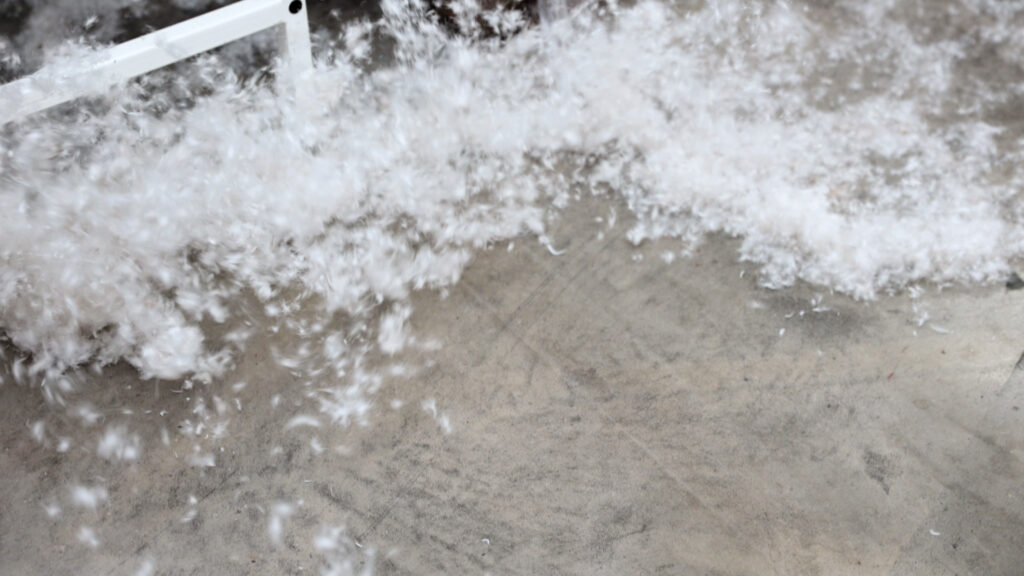
Down keeps you warm by trapping air within its clusters, creating countless tiny pockets that retain body heat while remaining lightweight and compressible. Two key factors affecting warmth and packability when buying a down product are the weight of the insulation and fill power. The weight of the insulation directly affects warmth: more down generally provides greater thermal protection. Fill power measures the loft, or fluffiness, of down higher fill power indicates that the down traps more air per gram, giving greater warmth for less weight. This is particularly important when choosing a jacket or sleeping bag for lightweight or high-performance use. Items with higher fill power will also compress down smaller for easier packing.
While down is incredibly warm and lightweight, it is naturally susceptible to moisture. Once wet, down loses much of its insulating ability and takes a long time to dry. To combat this, most modern down jackets and sleeping bags are treated with a durable hydrophobic coating, which helps the down resist water and retain its loft in damp conditions. However, this protection has limits – if down is consistently allowed to get wet, it will eventually lose its loft and thermal performance.
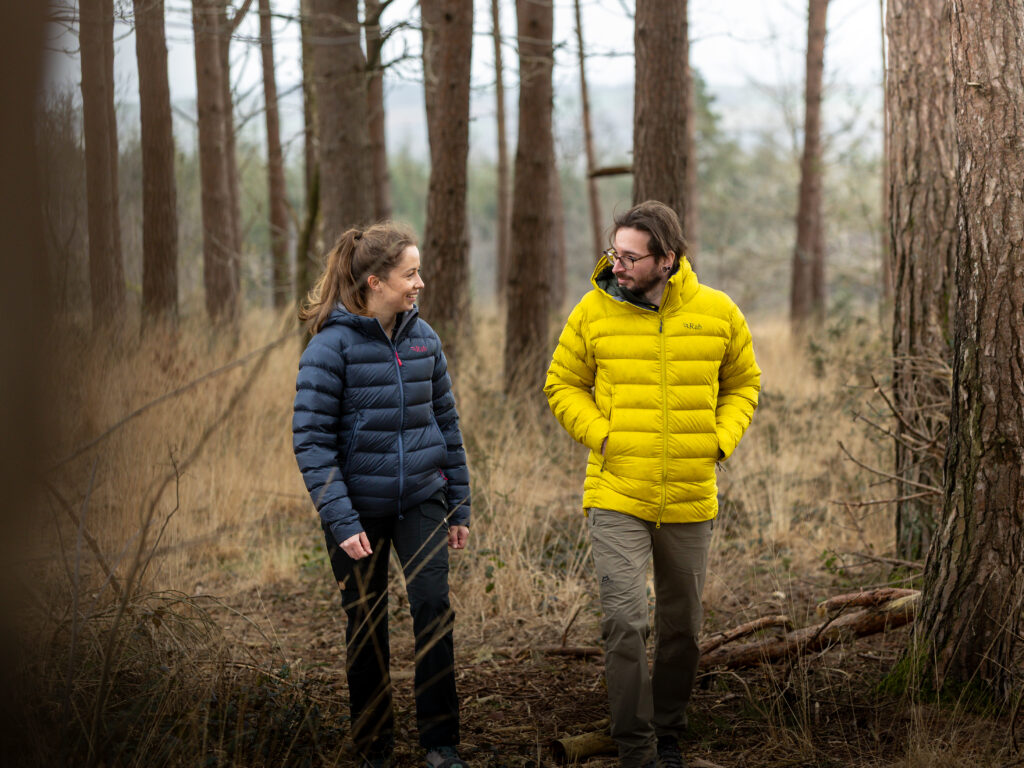


| Pro’s | Con’s |
|---|---|
| Extremely warm for its weight – excellent warmth-to-weight ratio | Loses insulating ability when wet |
| Highly compressible – packs down very small for easy to pack and carry | Can be expensive, especially high fill power and ethically sourced down |
| Long-lasting – can maintain loft and performance for many years if cared for | Requires careful care and washing to maintain performance |
| Even with water-resistant treatments, prolonged exposure to moisture can reduce loft |
Let’s Talk Synthetic
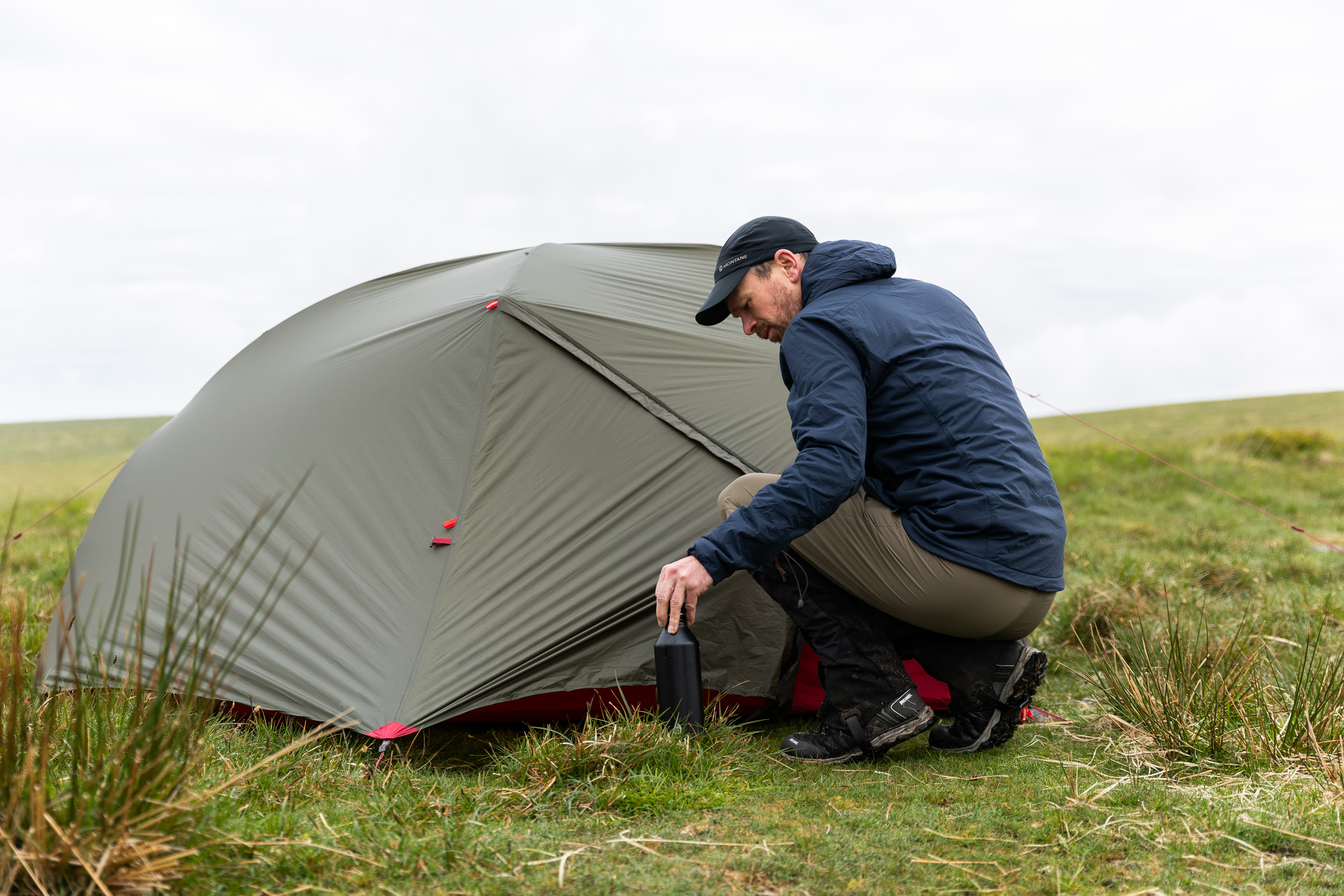
Now lets talk about a less well-known type of insulation, Synthetic. Synthetic insulation is designed to mimic the warmth and loft of down, but with a few key differences that make it a strong choice for certain conditions. Unlike down, synthetic fibres are man-made, usually from polyester, and they trap air in a similar way to down clusters, creating pockets that retain body heat.
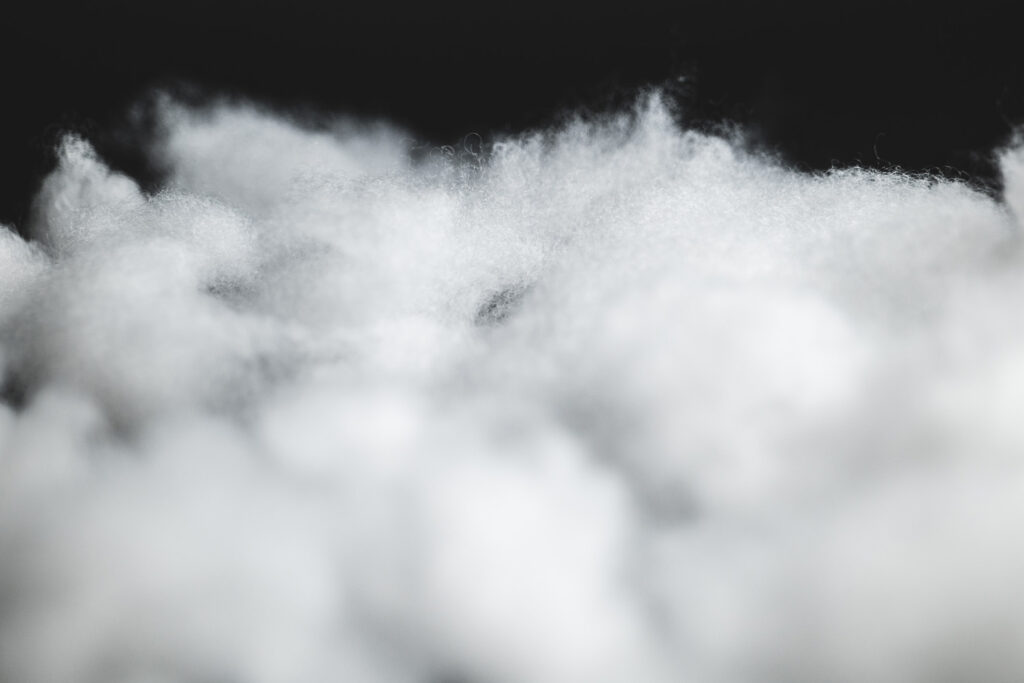
One of the biggest advantages of synthetic insulation is its performance in wet conditions. Unlike down, synthetic fibres retain most of their insulating ability even when damp and dry much faster than down, making them ideal for wet or humid environments.
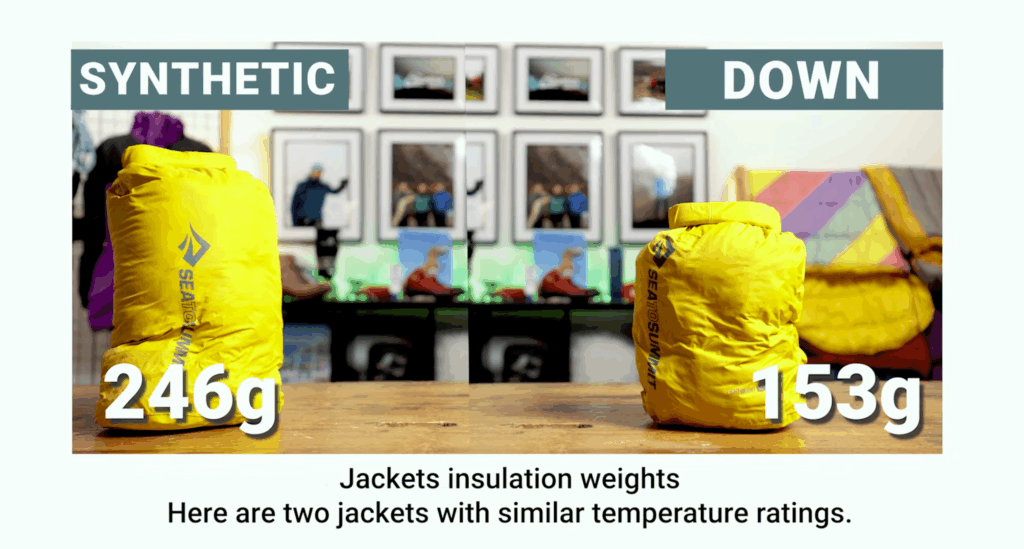
Another benefit is that synthetic insulation is often less expensive and can be engineered to provide varying levels of warmth and compressibility, allowing manufacturers to target specific uses like lightweight jackets, mountaineering, or budget-friendly sleeping bags. However, synthetic insulation tends to be slightly heavier and less compressible than quality down, so it will take up more pack space for the same warmth.
When choosing synthetic insulation, look at the weight and construction. Heavier insulation provides more warmth, while modern constructions, like hollow fibres or layered blends, aim to increase loft and compressibility without adding bulk. While it may not match the absolute warmth-to-weight ratio of premium down, synthetic insulation offers consistent performance in damp conditions and is a reliable choice for all-weather adventures.

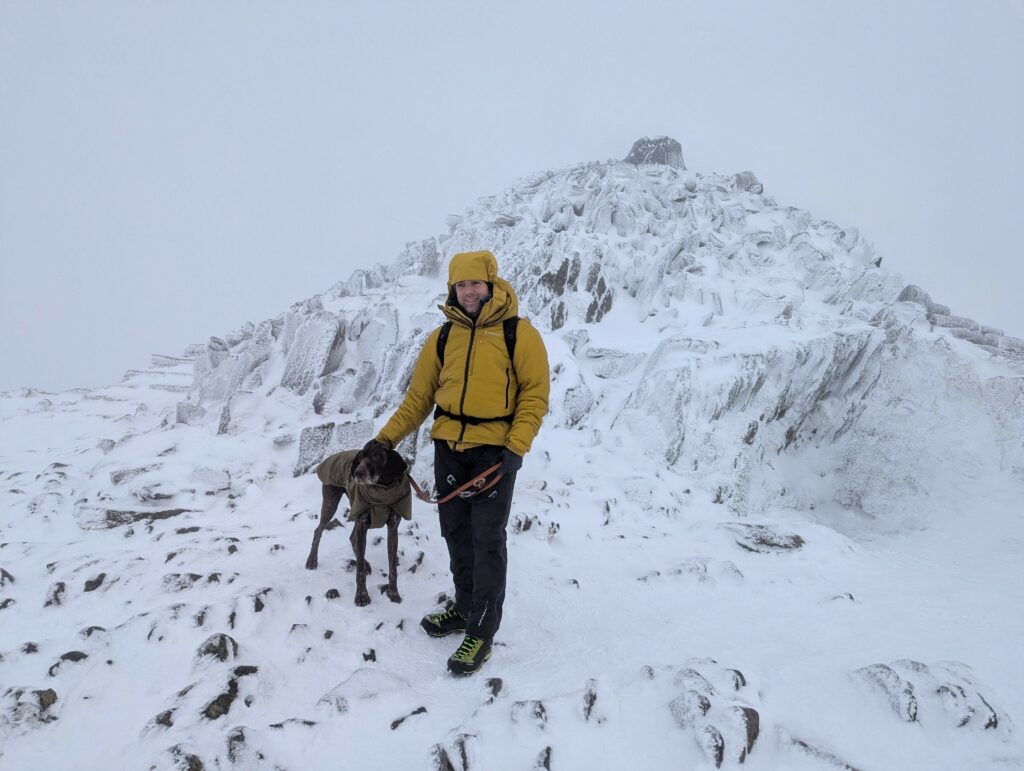
| Pro’s | Con’s |
|---|---|
| Retains most warmth even when wet | Heavier and less compressible than down for the same warmth |
| Dries quickly compared with down | Shorter lifespan – fibres can flatten over time, reducing loft and warmth |
| Usually more affordable than high-quality down | lower warmth-to-weight ratio compared with down |
| Easy to care for and machine washable | Bulkier to pack, especially for lightweight adventures |
| Performs consistently in damp or humid conditions |
So, what’s right for you?
Making the choice between down and synthetic insulation can be challenging, especially if you can only choose one. A simple way to decide is to list what you want from your jacket and when you’re likely to use it – this will help you make a confident choice.
If you’re after the most packable jacket with the best warmth-to-weight ratio, and you’re happy to follow proper care instructions, down is the clear winner. It’s perfect for ultralight hikers, trail runners, or day hikers who want maximum warmth with minimal pack weight.
Synthetic insulation, on the other hand, is better if you need consistent performance across a variety of conditions, don’t want to worry about strict care, or tend to be hard on your gear – leaving it in a pack for weeks, in the footwell of your car, or travelling for long periods where it may be compressed. Synthetic is especially valuable for winter mountaineering, where snow, ice, or frozen rock can wet your jacket. In these conditions, synthetic insulation retains warmth, making it a reliable choice for demanding adventures.
Put simply: light, warm, and extremely packable – choose down. Robust, versatile, and more affordable – choose synthetic.
What other options are there?
Synthetic and down insulation make up the majority of what you see in the outdoors, and both have seen significant developments in recent years. In the world of down, one notable innovation is ExpeDRY. This technology embeds gold particles that create an electrostatic shield, forming a small hydrophobic barrier and weakening the hydrogen bonds that allow water to form. By disrupting these bonds, ExpeDRY helps prevent moisture from coalescing into droplets and promotes faster drying.


This results in a drier insulating chamber within the jacket and helps manage internal moisture, such as sweat, during high-output activities, for more consistent warmth. ExpeDRY has helped bridge the gap between down and synthetic insulation in terms of moisture management, allowing jackets like the Montane Kamen (Click here to see our blog on the Kamen) to perform better in damp conditions without requiring frequent reapplication of traditional water-resistant coatings.
While it doesn’t eliminate the need for synthetic insulation entirely, it provides more versatility for wet-weather performance.
Synthetic insulation has also advanced significantly. The Mountain Equipment Oreus Jacket (Click here to see our blog on the Oreus) features proprietary Aetherm™ Precision Insulation, a next-generation synthetic fill designed to combine the warmth and compressibility of down with the durability and weather resistance of synthetic fibres.
Unlike traditional loose-fill synthetics, Aetherm™ uses multiple strands of recycled polyester fibres interlocked within a heat-reflective layer. This 3D construction maximises loft and air trapping while keeping weight and bulk to a minimum, giving warmth-to-weight and packability closer to down. The reflective layer further retains radiant heat, boosting thermal efficiency without adding extra mass.

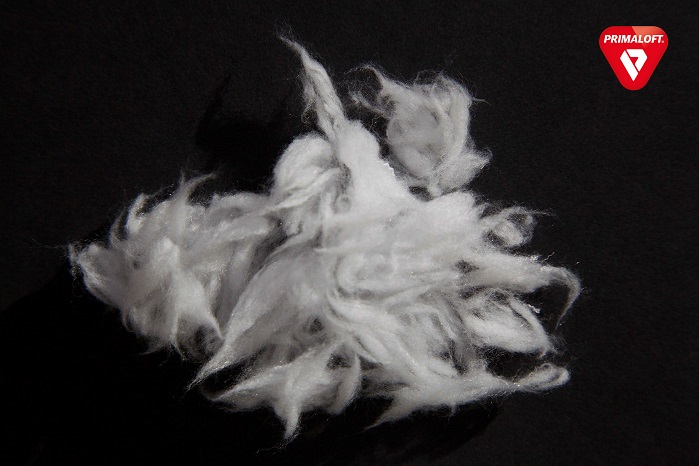
Another notable synthetic innovation is PrimaLoft® ThermoPlume®+, a soft, feather-like insulation that mimics the feel and fluidity of down. Combining ThermoPlume® plumes with fibre balls, it creates a resilient loft that resists clumping even in damp conditions. This improves warmth-to-weight ratio and packability, bringing synthetic insulation closer to down in performance, though exact warmth-to-weight metrics depend on the specific product.
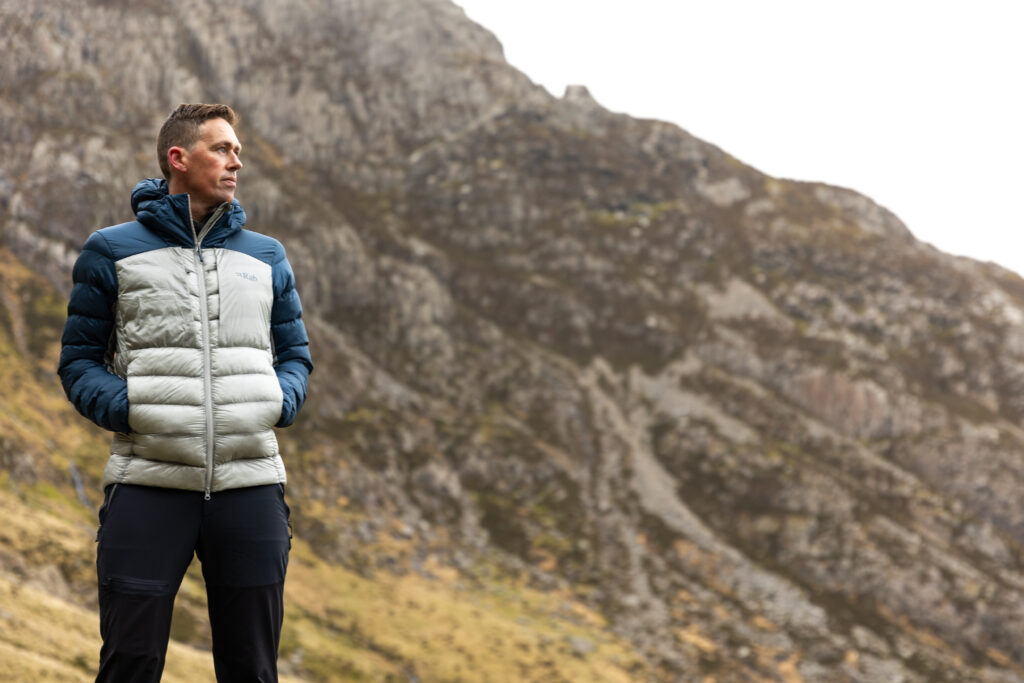
Finally, there’s wool, an often-overlooked natural insulation option that has recently been brought back in the Mountain Equipment Andola jacket. Wool insulation, typically made from merino or other fine wool fibres, traps air within its crimped fibres to create insulating pockets, similar to down or synthetic fills.
Wool naturally regulates temperature, keeping you warm when it’s cold while wicking moisture away from the skin, making it ideal for high-output activities. It is also naturally odour-resistant, perfect for multi-day trips or situations where washing isn’t convenient.
Unlike down, wool retains much of its insulating ability when damp, and unlike synthetic fibres, it’s fully biodegradable and renewable. For those who like the idea of synthetic insulation but prefer a natural option, wool is an excellent alternative.
Plain and Simple
Although all this information can seem overwhelming, and there is some debate about the latest developments in down and synthetic insulation, the simple fact is this: if you’re looking for the best warmth-to-weight ratio and the most packable option, down is the way to go.
If you want something more robust, dependable in damp conditions, and lower-maintenance, synthetic insulation is the better choice. And finally, if you’re looking for a natural alternative to synthetic insulation, wool is an excellent option.